

The complete guide
Choosing a Golf Swing Trainer That Fits Your Practice
Finding time to work on your swing is one thing. Choosing equipment that fits the way you practise is another. A training tool can look useful in a photo yet turn out to be too long for your space or the wrong fit for your hands.
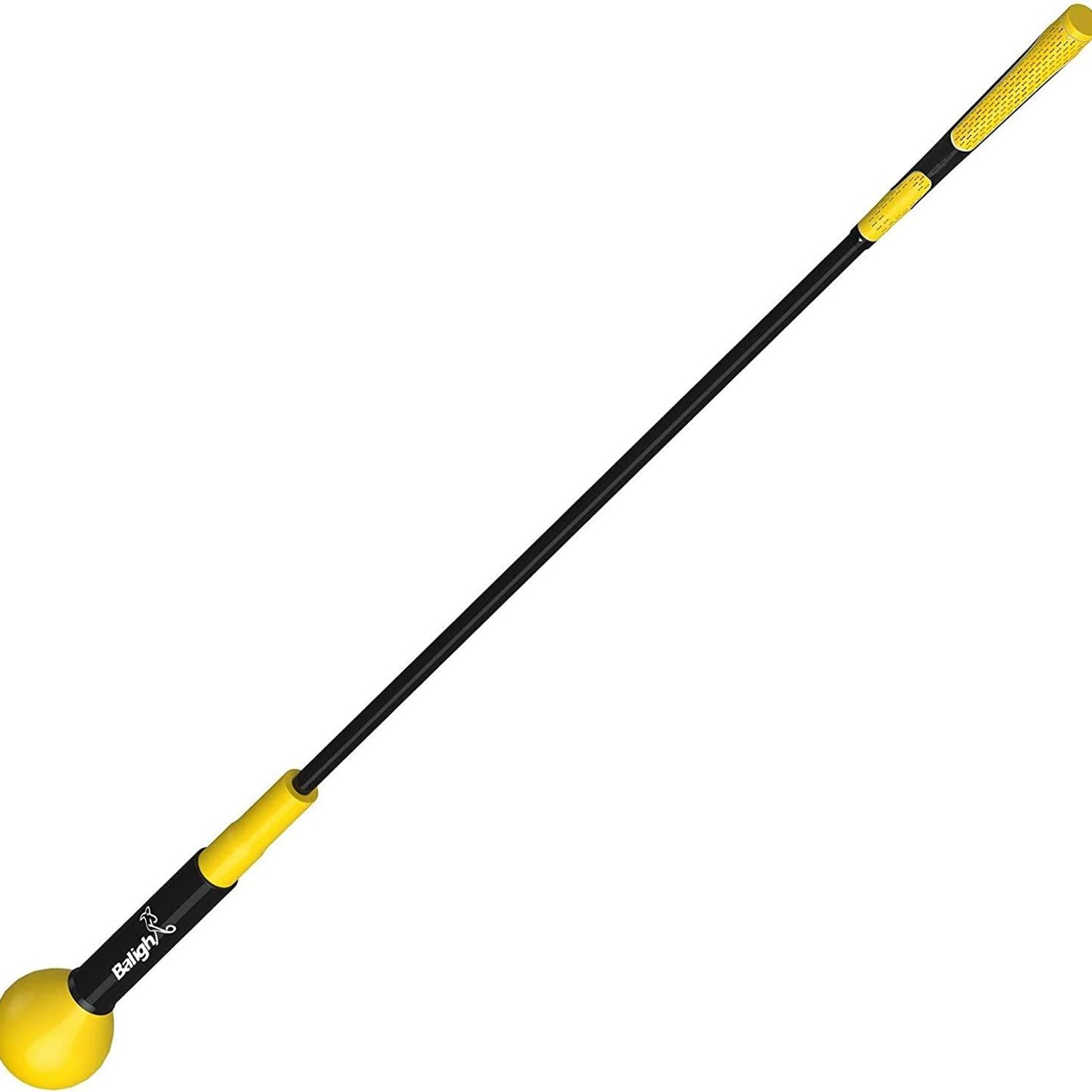
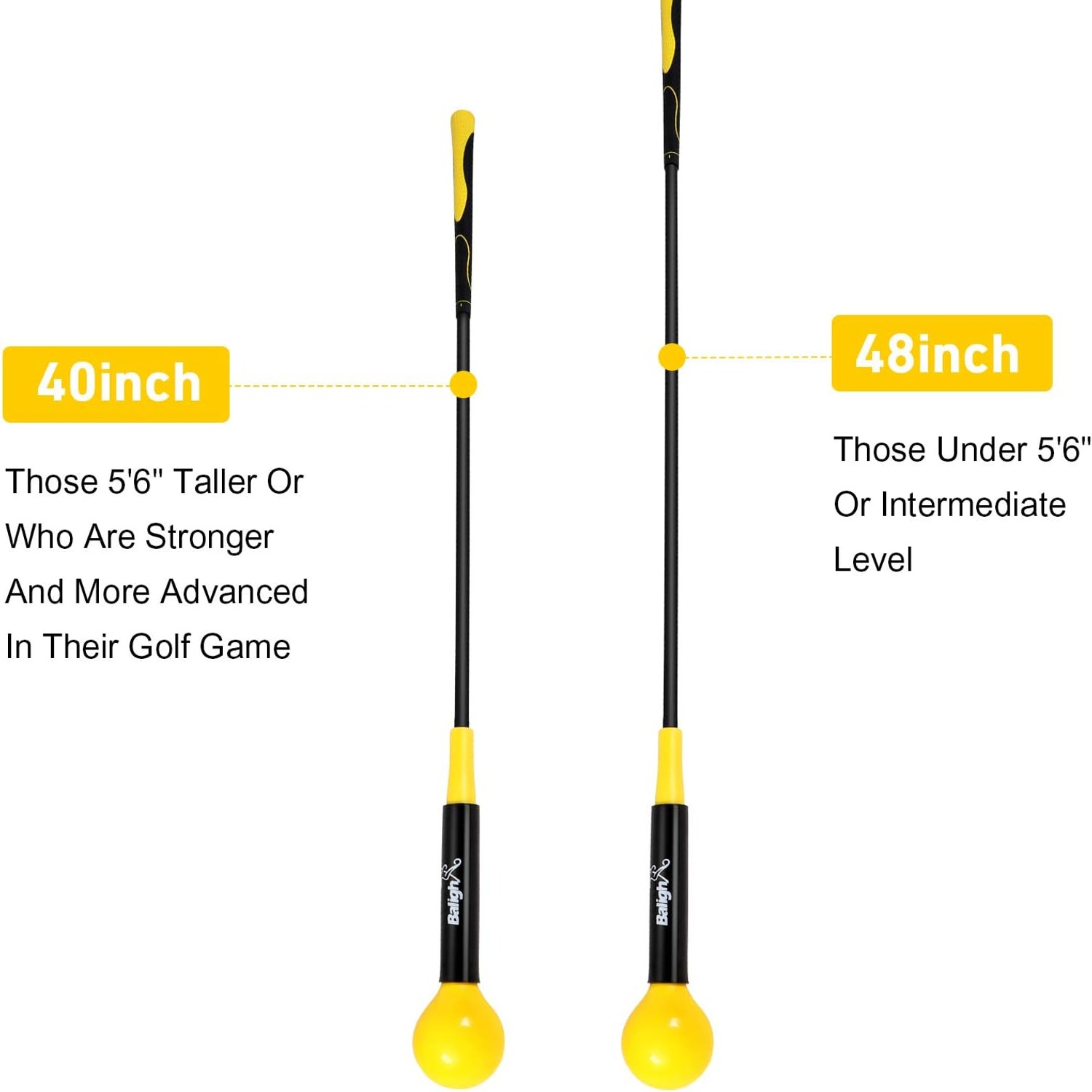
This Golf Swing Trainer is listed as a single 48-inch practice accessory with an ambidextrous hand orientation. It has a small training grip, and the product details describe it as yellow and made from rubber.
Those are the starting points for a sensible choice. Before thinking about a training routine, check whether the stated size and grip suit you. A tool you can use in an appropriate setting is a better match than one chosen on broad promises alone.
What a golf swing trainer is for
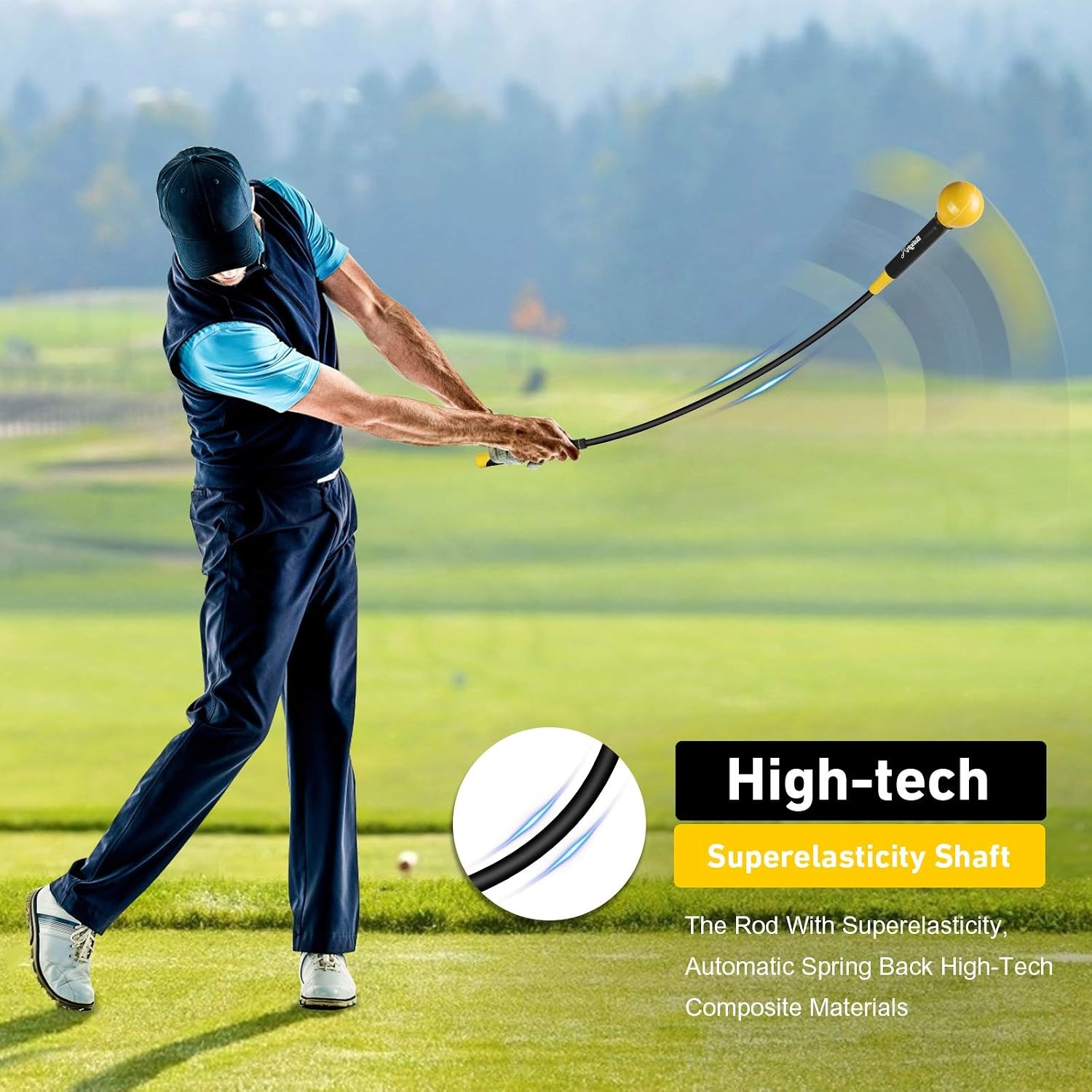
A swing training aid gives you a separate tool for rehearsing a golf swing. The source description presents this one for repeated swings and refers to flex as part of that movement. It also describes tempo practice and warm-up use.
That does not mean it can diagnose a fault. Nor does it tell you whether a movement is correct for your own swing. Repeating an action and understanding that action are different tasks.
Think of this golf practice trainer as equipment for a practice routine, rather than a complete lesson. If you have a specific concern, such as a change in your swing path, a coach can help you decide what to practise and whether this type of tool belongs in that work.
Start with the 48-inch size
Length deserves attention before almost any other detail. This item is listed as 48 inches, with overall dimensions of 7.5 × 7.5 × 121 cm. It is not a compact desk-side practice tool.
The space needed for a swing is much greater than the trainer's length on its own. Your arms extend the movement, and your body changes position through the swing. A room that looks open while you stand still may not offer enough clearance once you move.
For golf swing practice at home, look beyond floor area. Consider ceilings, light fittings, windows and furniture. Also think about whether another person or a pet could enter the space. If you cannot keep the full movement clear, choose a different practice location.
Read the size information with care
The source description mentions several lengths and weights. It does not clearly separate all of those references into distinct product options. This page therefore uses the 48-inch size and 476 g weight given in the product details.
That distinction matters if you are comparing a 48 inch golf trainer with a shorter model. Do not assume that every size discussed in a general description is included or available with this item.
If a precise length or training weight is central to your choice, ask for confirmation before ordering. It is better to settle an unclear specification early than to build a practice plan around a number that refers to another version.
Left-handed and right-handed use
The hand orientation is listed as ambidextrous. You do not need to choose between a separate left-handed or right-handed option in the supplied product record.
This may make an ambidextrous golf trainer worth considering in a household where golfers use different hands. It does not, however, mean that everyone will find the same grip or length comfortable.
Hand orientation answers one part of the fit question. Grip size, reach and available practice space still need their own checks. A shared tool should suit each person who plans to use it, rather than simply matching the way they hold a club.
Pay attention to the small grip
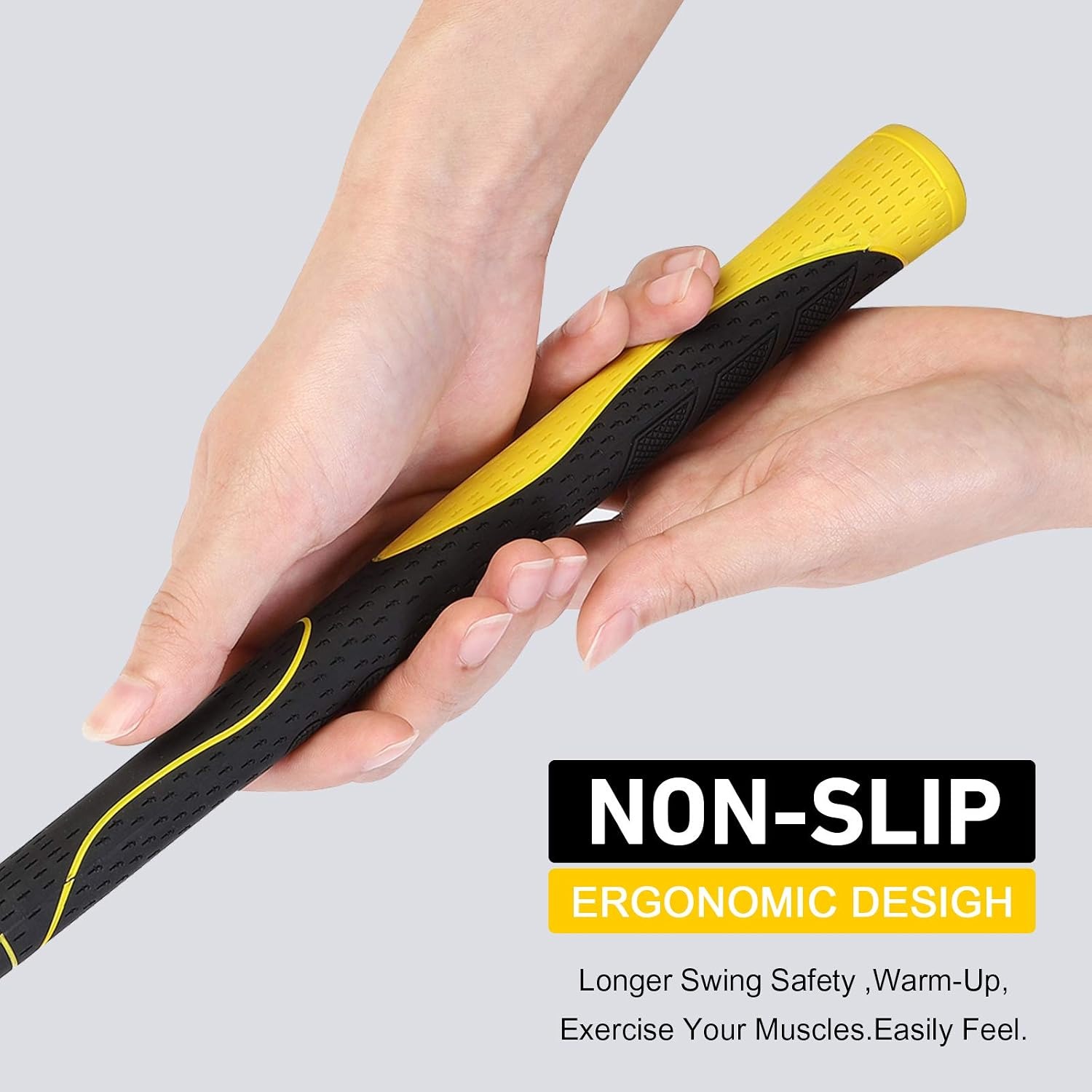
The product details call the grip size small and the grip type training. No circumference or grip length is provided. That leaves an important limit on how closely you can compare it with your usual playing grips.
If you already prefer a particular grip size, use that preference as a reason to ask questions. Do not assume a small grip golf trainer will feel the same as a club described with a similar size label.
Comfort is personal. A product photograph cannot tell you how a handle will sit in your hands. When buying as a gift, this is one detail worth checking with the recipient, even if it means giving away part of the surprise.
What the material details tell you
Rubber is the material listed in the product details. Yellow is the listed colour. The structured record does not provide a verified breakdown of every component or a country of origin.
Those limits are worth keeping in mind when comparing golf practice equipment. A general material label is not enough to establish how every part is made, how long it will last, or which conditions it can withstand.
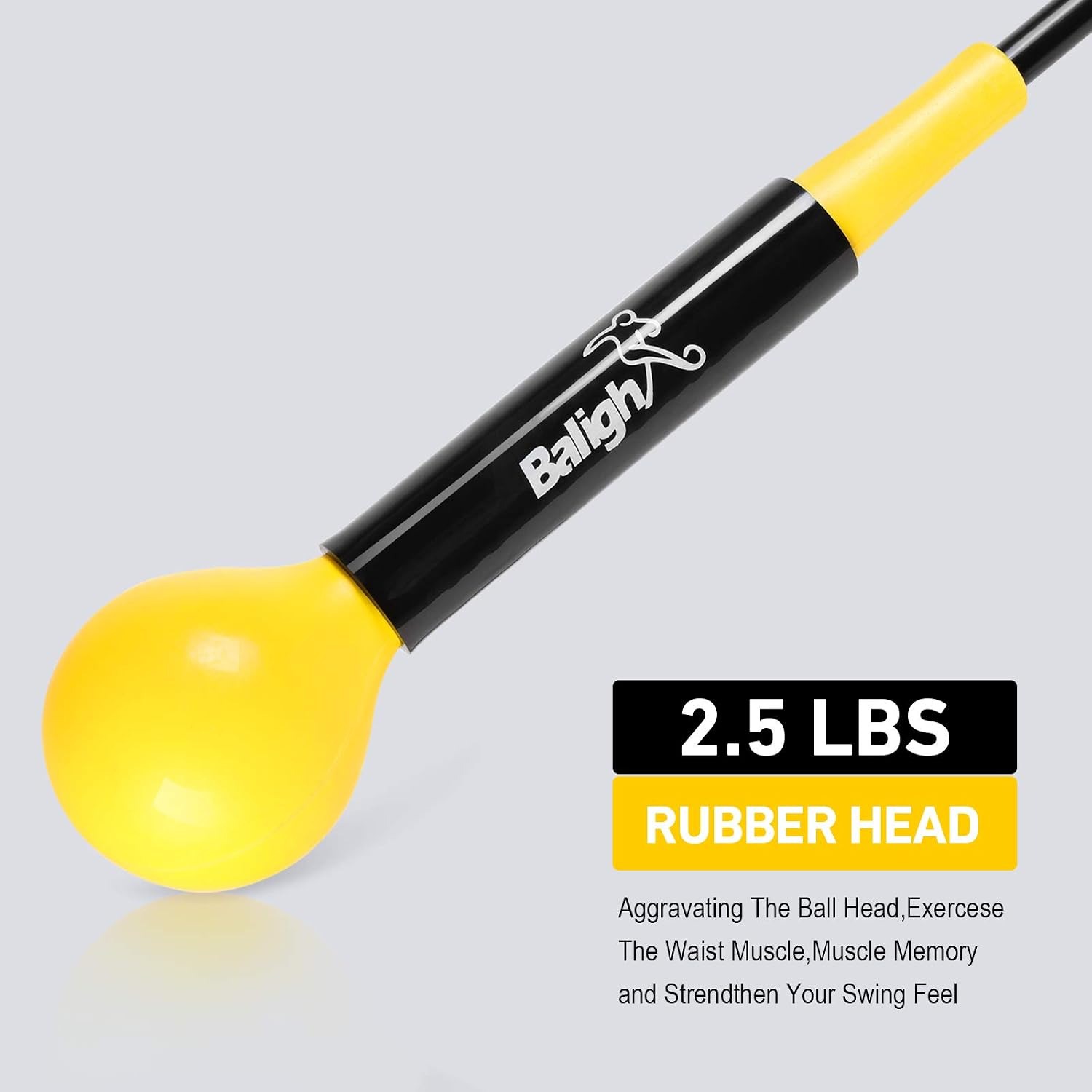
The same care applies to the listed weight of 476 g. It is a useful comparison point, but other weights appear in the source description. If you are seeking a rubber golf trainer with a particular weight, confirm that figure rather than treating all the source references as interchangeable.
Who should consider this type of tool?
Someone who wants a dedicated swing rehearsal accessory may find this format relevant. The product description mentions beginner practice, but it does not give a clear age range or a reliable height-based fitting chart for this specific item.
A beginner golf training aid should still be chosen with care. New golfers may benefit from asking a coach which task to focus on before buying equipment. That gives the tool a defined place in practice.
More experienced players can take the same approach. Start with the reason you want a trainer, then compare its size and grip with that purpose. Experience alone does not make every training accessory a good fit.
Do not read too much into the flex and loft fields
The product details include Junior flex and a 10-degree loft. These are familiar golf terms, but their role on this particular trainer is not explained.
Junior flex should not be read as proof that this item suits a child. The listed 48-inch length still needs to be considered, and no age recommendation is supplied.
Likewise, the loft entry does not establish how this trainer would strike a ball. Ball-striking use is not confirmed. Choose it as the practice accessory described, not as a substitute for a playing club with a known shot profile.
Give practice a clear purpose
A useful session starts with knowing what you are trying to rehearse. That might be a movement suggested in a lesson or a tempo exercise your coach has explained.
The source presents the item as a golf tempo trainer, but it does not include a timing scale or measured feedback system. You will still need a way to judge the movement you are practising.
Keep expectations grounded. No score reduction, distance gain or swing correction is established by the supplied facts. If you are unsure what the trainer is meant to help you notice, ask before adding repetitions. Clear guidance matters more than simply making more swings.
Think carefully about warm-up use
The source also describes the product as a golf warm up trainer. That is a stated use, not a personalised exercise prescription or a promise about flexibility.
Do not choose a routine based only on a product description. Your own circumstances and any advice you have received matter more than a general suggestion about practice.
If a movement causes discomfort, stop rather than trying to work through it. Questions about pain or a physical limitation belong with an appropriate health professional. A golf training accessory cannot answer those questions for you.
Cleaning, storage and everyday checks
Simple care is a sensible starting point when detailed maintenance instructions are not given by the maker. Wipe surface dirt away with a soft, damp cloth, then allow the trainer to dry before putting it away.
Avoid harsh cleaners, prolonged heat and direct sunlight. No chemical resistance or weatherproof rating is given, so there is no basis for treating it as equipment that can be left outdoors.
Before use, look for visible damage or a change in the grip. Store it where it will not fall across a walkway or sit bent under other items. If you plan to carry it in a golf bag, compare the bag's space with the listed dimensions first.
Buying it as a gift or ordering for yourself
A golf practice gift works best when it matches the recipient's habits. Ask whether they have somewhere to use a long swing trainer and whether they like a small grip. Those practical questions matter more than guessing their training goals.
For your own order, check delivery information at checkout.
The supplied South African terms allow 14-day change-of-mind returns counted from delivery, with return postage paid by the customer. Rights under the Consumer Protection Act 68 of 2008 also apply. Keep order details handy and raise any problem promptly.
The short version
This yellow golf swing trainer is listed as one 48-inch accessory with a small training grip and ambidextrous hand orientation. Its listed weight is 476 g, and rubber is the stated material.
Choose it by those concrete details. Confirm any specification that is essential to you, make sure you have suitable space, and give the tool a clear role in practice. That is a more useful basis for buying than expecting one accessory to change your game on its own.