
The complete guide
A Practical Guide to Choosing a Compact Golf Rangefinder
A distance marker can be useful, but it may not tell you the distance to the target you are looking at. You might want to check the flag from a different part of the fairway, or compare a straight-line reading with one that takes slope into account. A handheld rangefinder gives you another way to make that check.
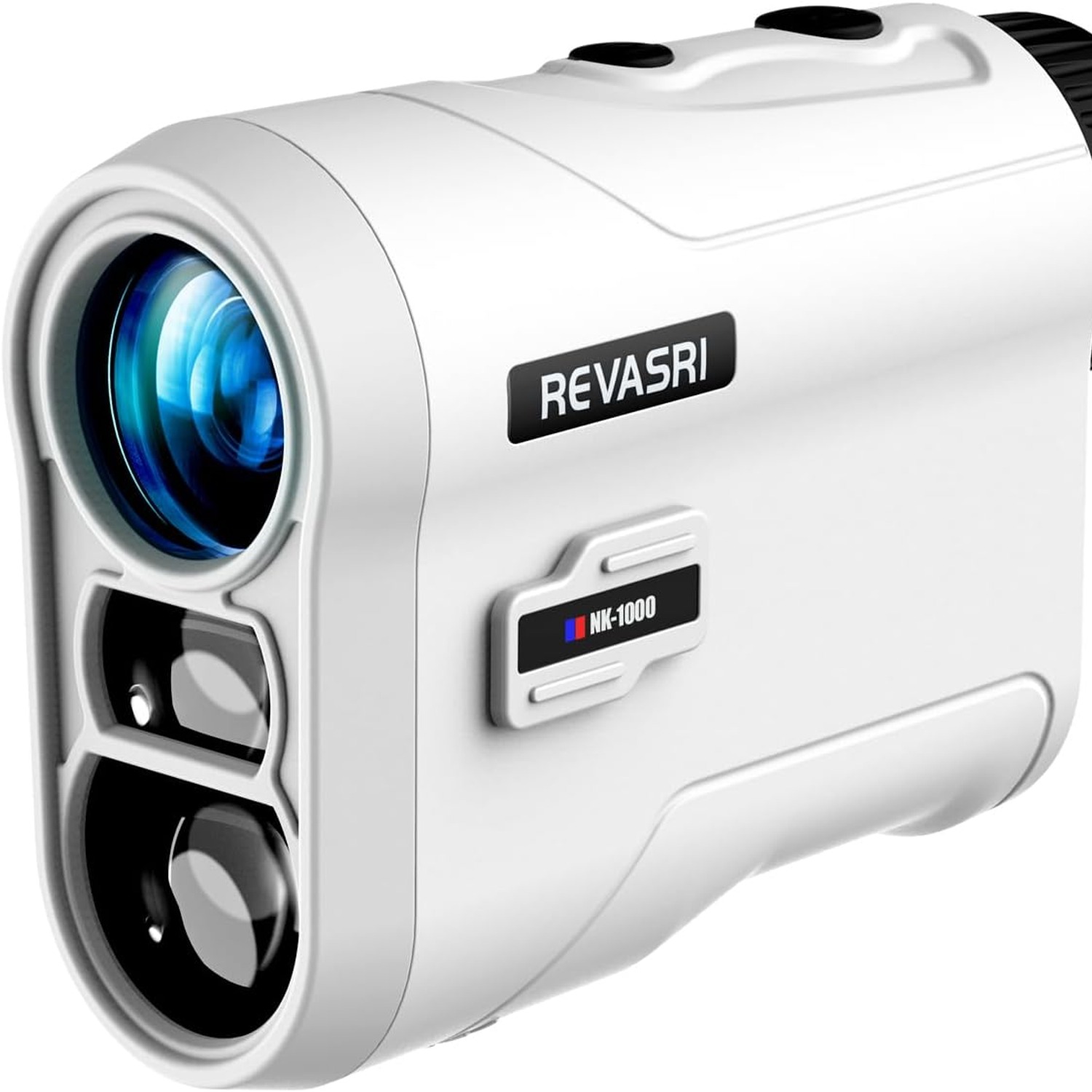
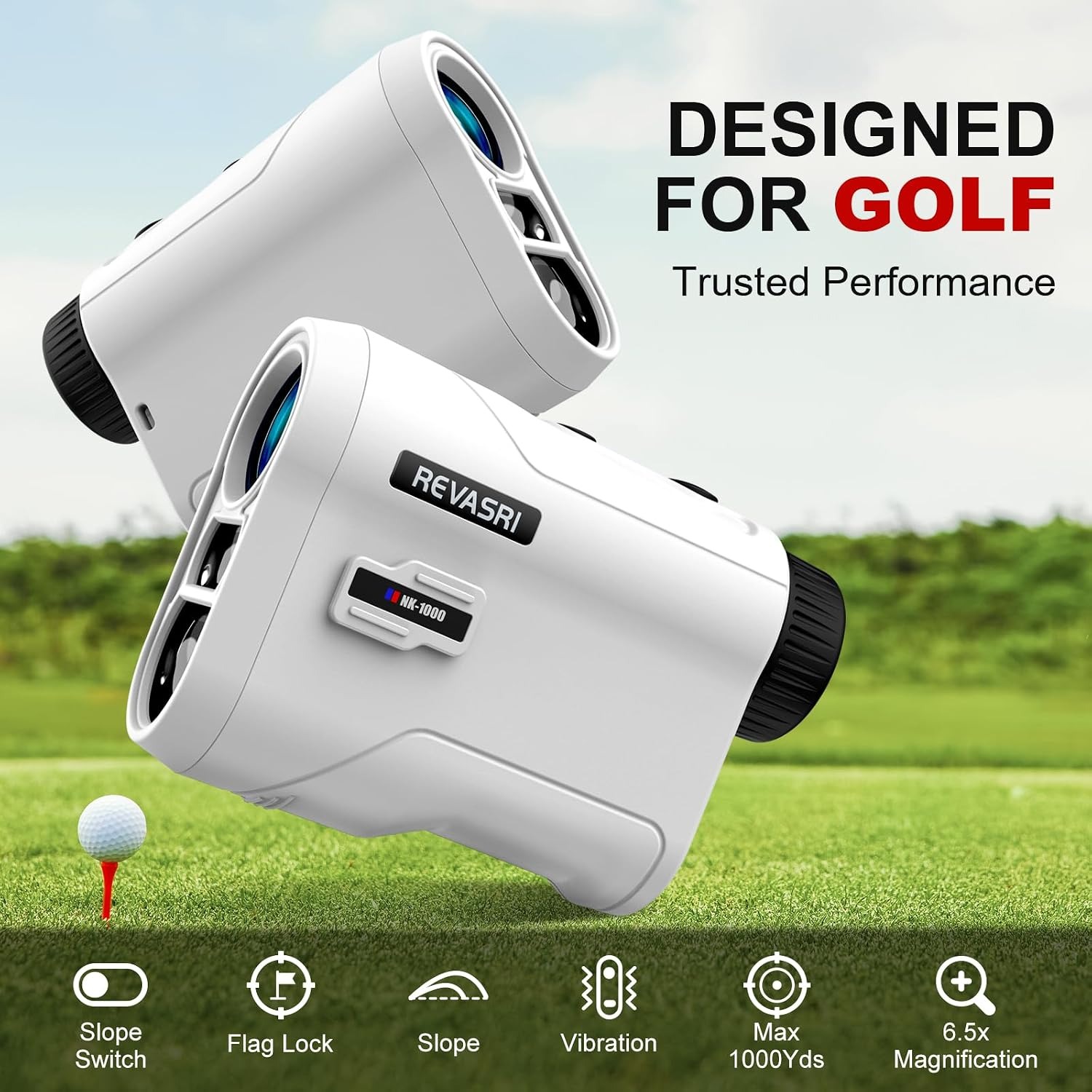
The Compact Golf Rangefinder combines distance measurement, a switchable slope function and flag-lock vibration in a 120 g body. Before choosing it, it helps to understand what those features do, what the listed figures mean and which details are not given by the maker.
Start with the way you play
Think about when you would reach for a distance device. If you prefer to look at a target and take a reading yourself, a handheld golf distance finder may fit your routine. You aim the device rather than choosing a point on a phone screen.
That does mean aiming is part of the process. Give yourself time to learn the controls before relying on it during a round. Practise changing units and checking which slope mode is active, as well as taking a reading.
A rangefinder supplies distance information. It does not choose a club for you or account for every part of a shot. Your usual judgement still matters, including what you know about your own club distances.
Understand the stated distance range
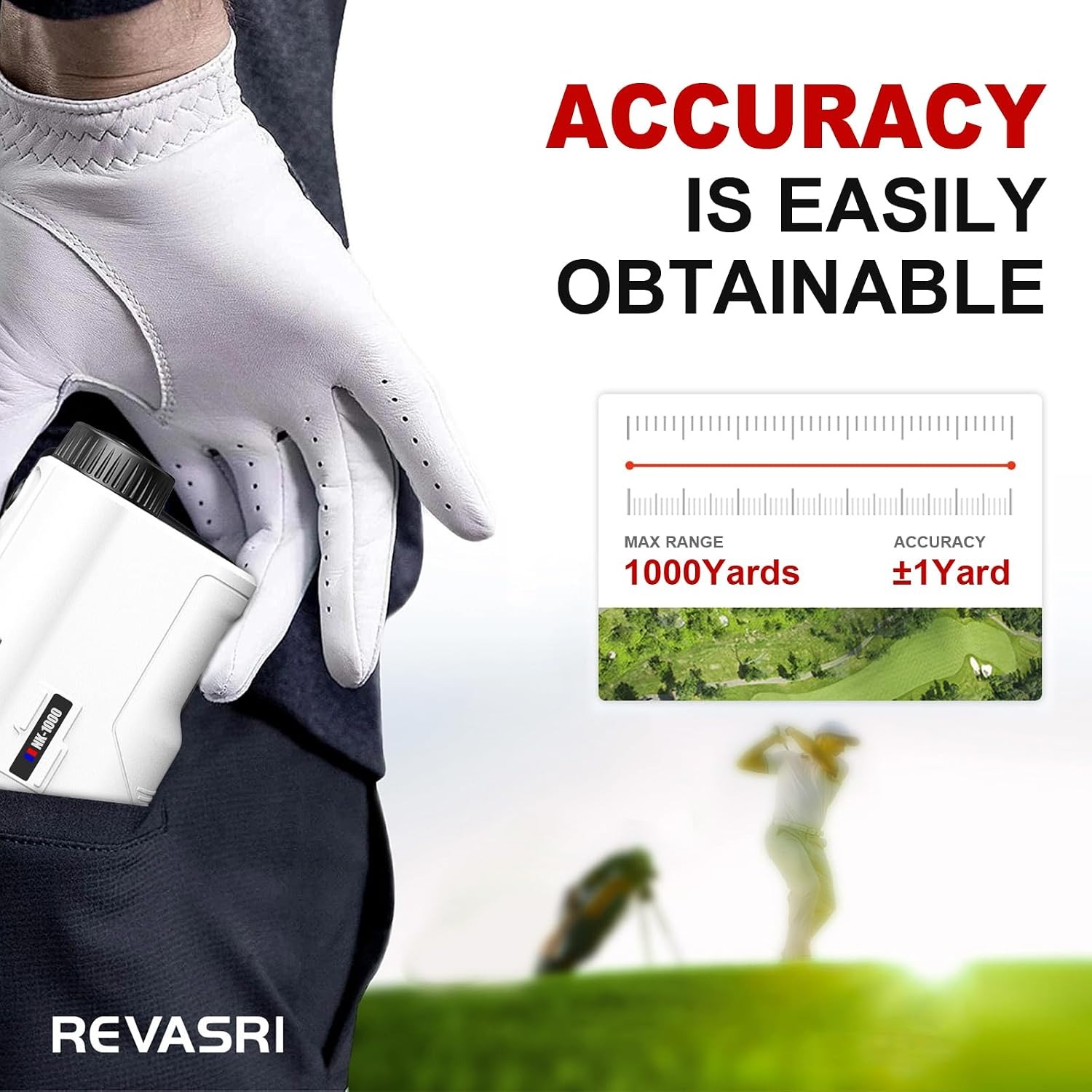
This model lists a measuring range of 5–1000 yards. That is the overall measuring range given in the maker's description. It should not be read as a promise that every flag can be identified at the far end of that range.
The stated accuracy is ±1 yard, with a listed measurement time of 0.5 seconds. Those are maker figures. The maker does not include a detailed test method or separate results for different targets.
When comparing a 1000 yard golf rangefinder with another model, keep the labels straight. Overall measuring range, flag-lock range and accuracy are different pieces of information. Only the first and third are given by the maker, so avoid filling the gap with an assumption.
How flag lock and vibration help
A flag can sit in front of trees or other background detail. That can make it harder to tell what you are aiming at through a small handheld device. The flag-lock function is intended for this situation.
The listed method is to hold the measurement button and scan. When the device recognises the flag, it locks the measurement and gives a vibration signal. This gives you feedback without requiring you to rely on the display alone.
A pin seeker rangefinder still needs careful use. Pause, aim deliberately and repeat a reading if it looks out of place. The feedback tells you that the device has recognised a flag, but it should not replace a sensible check of the result.
Decide whether slope adjustment matters
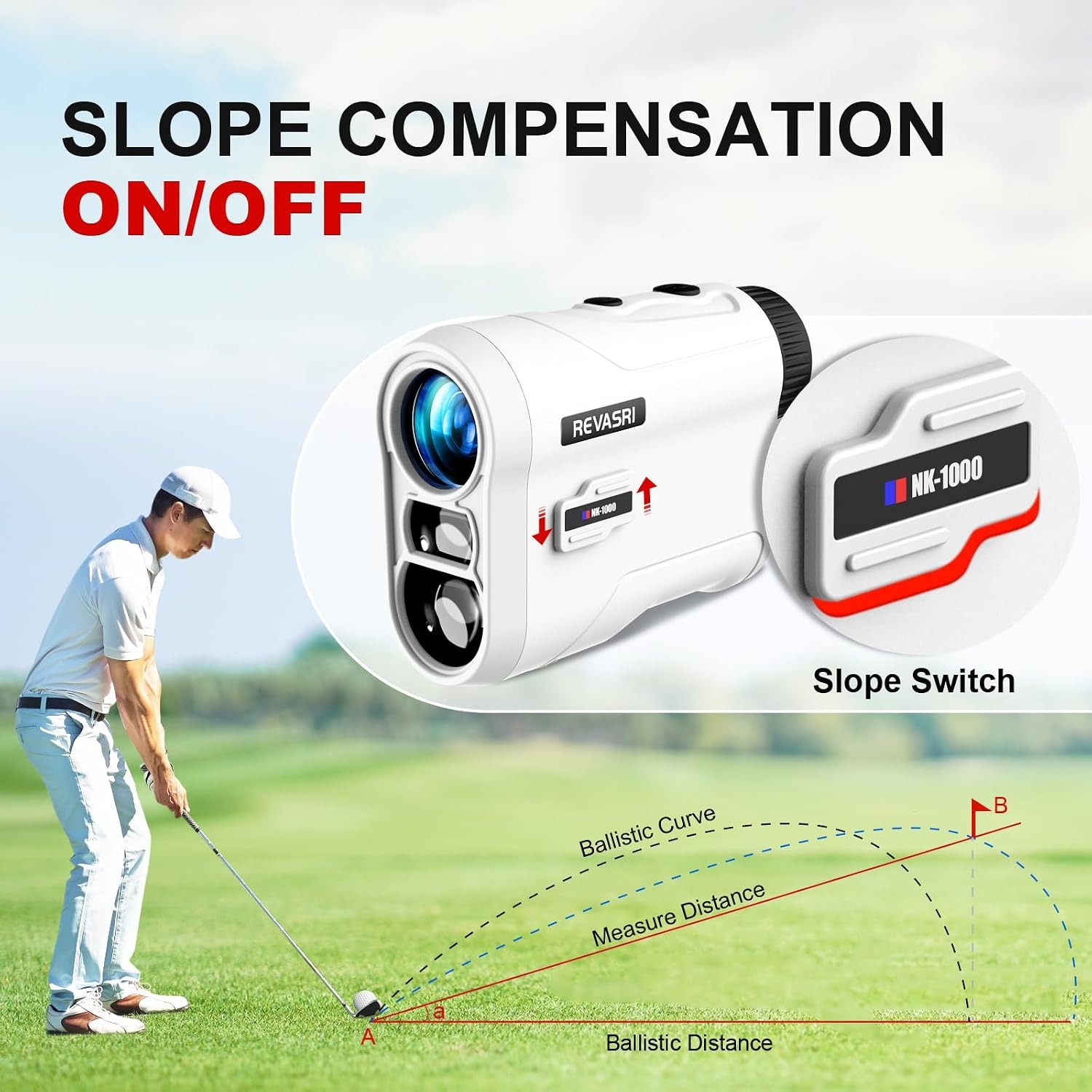
An uphill or downhill target can make a straight-line distance less useful on its own. This golf rangefinder with slope offers an additional compensated distance when the slope function is enabled.
In slope-on mode, the display shows angle, line-of-sight distance and golf compensation distance. These are different readings, so take time to learn which is which in the manual. That helps prevent using the wrong number simply because you are in a hurry.
The external switch turns the angle function off. With slope disabled, the device displays line-of-sight distance and keeps flag lock and vibration available. No claim of competition approval is made here. Ask your event organiser which devices and settings are allowed before play.
Check the size against your kit
The listed dimensions are 9.7 cm long, 3.3 cm wide and 6.6 cm high. Its stated weight is 120 g. These figures are more useful than the word compact on its own because you can compare them with your available bag space.
If you are buying a lightweight golf rangefinder to carry throughout a round, think about access as well as size. A device tucked beneath other gear may be less convenient than one kept where you can reach it.
The package includes a pouch with a carabiner. That gives you a supplied carrying option, although the pouch dimensions and closure type are not stated. Check the fit with your usual kit once it arrives, rather than assuming every pocket will suit it.
Look at viewing and unit choices
Maximum magnification is listed as 6.5×. The lens is also described as fully multilayer coated. These are useful specifications to note, but the maker does not state every optical detail.
For example, there is no supplied eye-relief measurement or detailed information about use while wearing glasses. If either point is important to you, ask before buying. A magnification figure alone cannot answer every question about viewing comfort.
You can switch between metres and yards using the unit control. Choose the unit you normally use for club distances, then check it before your round. A familiar unit makes a reading easier to interpret without a mental conversion at every shot.
Plan for charging
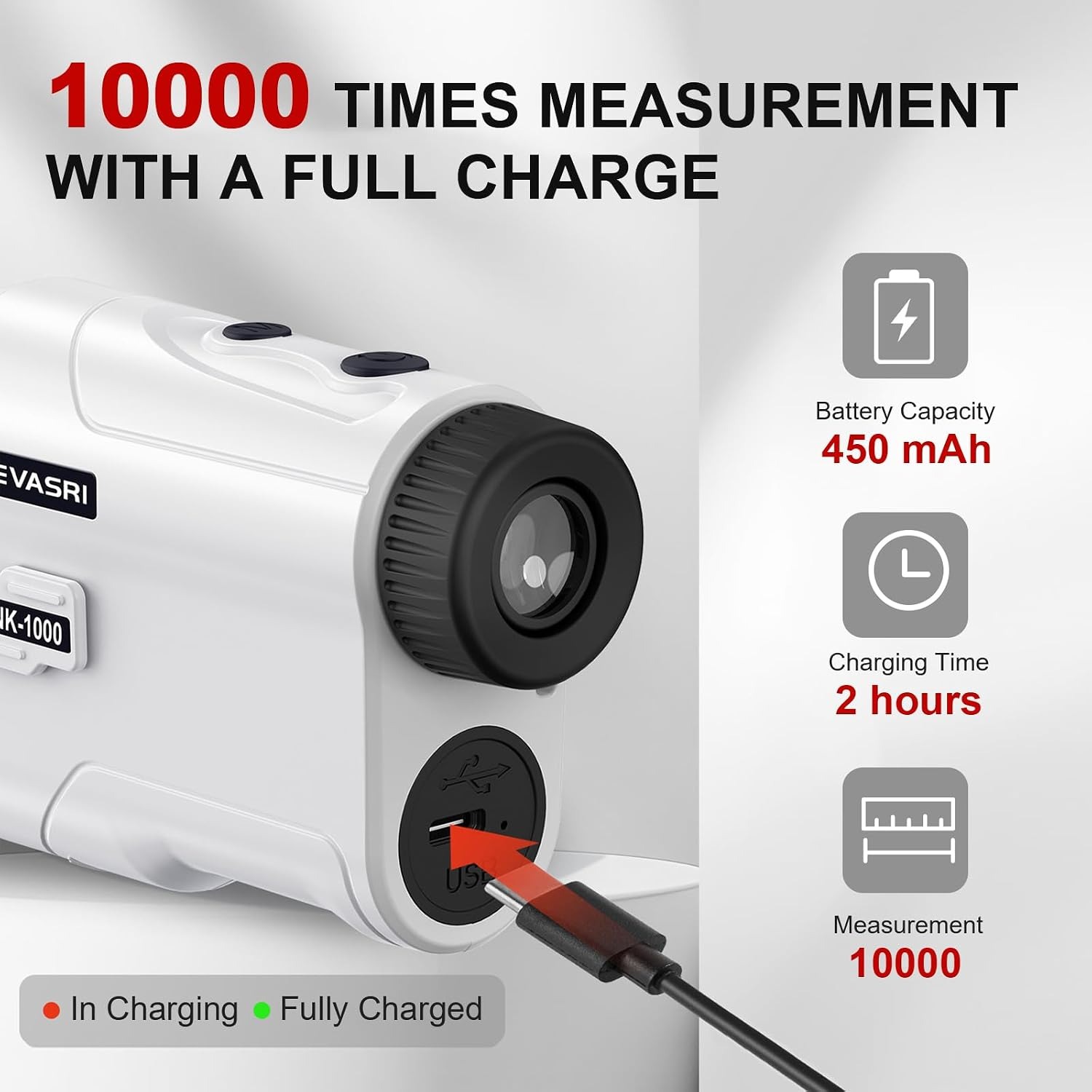
This is a rechargeable golf rangefinder with a built-in lithium-ion battery. A USB-C cable comes in the box, and the device has a low battery indicator. Battery capacity, runtime and charging duration are not provided.
That means it is better to build charging into your routine than to assume a fixed number of rounds per charge. Check the battery before leaving, especially if the rangefinder has been stored for a while.
A USB-C golf rangefinder may fit well with the cables you already carry, but follow the supplied manual for its charging requirements. A wall adaptor is not listed in the box contents. Do not assume the package includes one simply because it includes a cable.
Treat weather protection with care
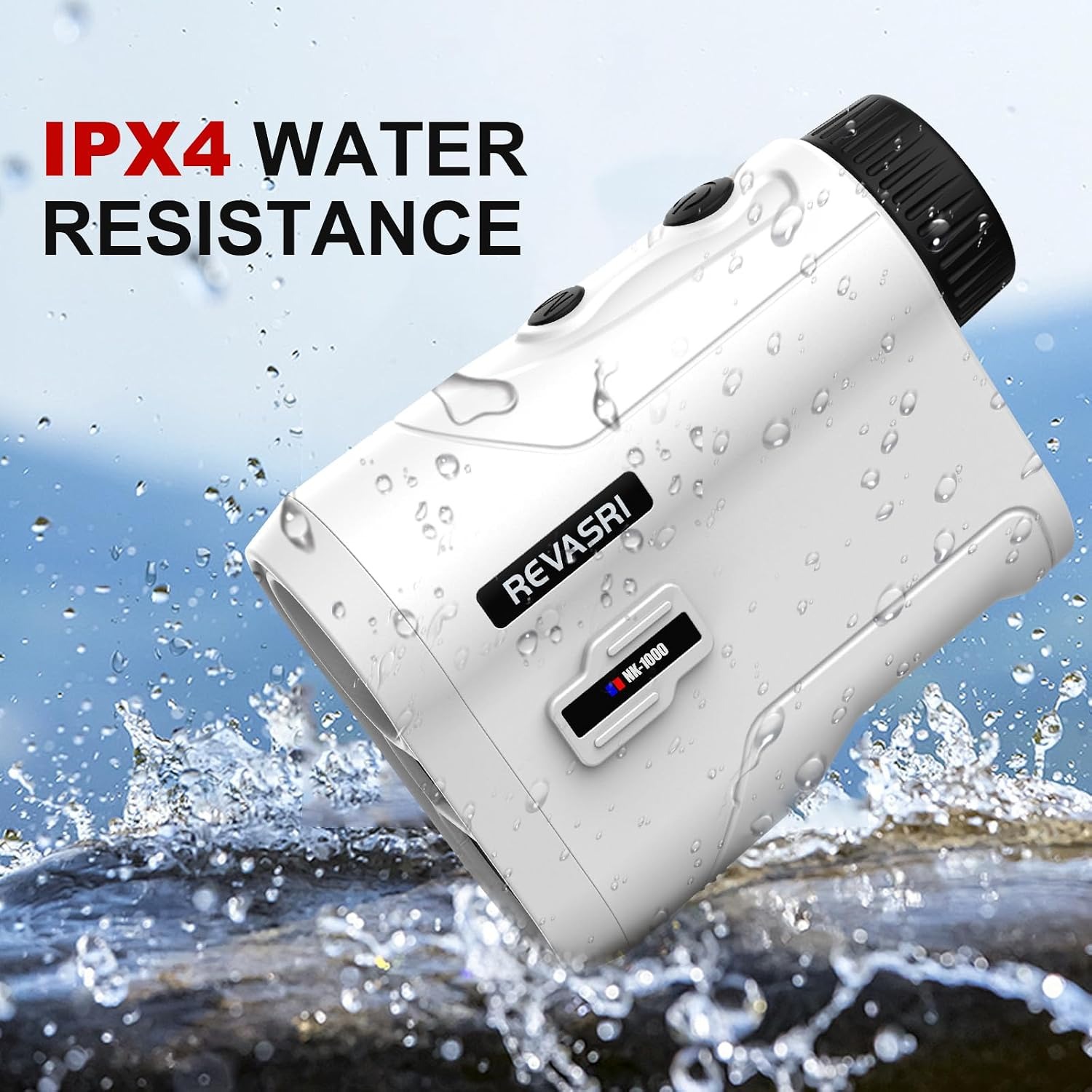
The specification table gives an IP54 rating. Another source field uses the broader word waterproof, but the more cautious approach is to treat the device as splash-resistant equipment. Do not submerge it or leave it sitting in water.
Weather protection is also not a reason to ignore routine care. Wipe away moisture after use, keep the charging connection dry and let the device dry before putting it away.
If wet-weather use is a major part of your buying decision, check the manual for the stated limits. No separate immersion depth or underwater-use claim is provided here. It is better to ask about an unclear point than to test it on the course.
Know what is included
The package list contains one rangefinder, one pouch with carabiner, a USB-C charging cable, a lens cloth and a user manual. The battery is built in. This gives you the listed carrying, charging and basic lens-cleaning items together.
It does not confirm a wall adaptor, replacement battery or extra mounting accessories. If you need anything beyond the listed contents, check before ordering rather than planning around an unlisted extra.
For gifting, the practical question is whether the recipient wants this type of device. Someone who prefers handheld target checks may value a golf rangefinder with vibration. Gift packaging is not specified, so make separate arrangements if presentation is important.
Keep care simple
Use the supplied cloth gently on the lens. Avoid rough fabrics and abrasive cleaning products, which are not sensible choices for optical surfaces. Follow the manual if dirt does not come away with a light clean.
Wipe the body with a soft cloth and store the unit somewhere dry. The body material is listed as acrylonitrile butadiene styrene, or ABS, in the NK1000 White colour variant.
Keep the manual with your golf equipment so charging and control instructions remain easy to find. It is also worth keeping all supplied accessories together. That makes routine use easier and helps if you later need to discuss a return.
Check delivery and returns before ordering
For delivery in South Africa, check the estimate shown for your address.
Change-of-mind returns are available within 14 days from delivery, with return postage paid by the customer. Your rights under the Consumer Protection Act 68 of 2008 also apply.
When the order arrives, check the contents and read the manual before your first round. If an item is missing, incorrect or faulty, contact us and describe the issue clearly. That is different from deciding that the product simply does not suit your preferences.
The short version
Choose this compact golf rangefinder if its listed size, rechargeable battery, switchable slope function and flag-lock feedback match how you want to check distances. Its metres-and-yards option and included pouch are practical details worth comparing with your current kit.
Keep the unknowns in view too. Battery runtime, charging time and a separate flag-lock range are not given by the maker. Check those points if they are essential, confirm delivery and return terms, and choose based on the features you will actually use.